
Loons & Lead
Lead poisoning is one of the leading causes of death for adult Common Loons in the Northeast, accounting for hundreds of adult loon deaths over the last 25 years. These deaths are completely preventable by using non-lead fishing tackle.

MAINE 
MASSACHUSETTS 
NEW HAMPSHIRE 
NEW YORK 
VERMONT
Click on your state above to find information about state laws, tips for using lead-free tackle, where to buy lead-free tackle locally, and where to dispose of lead properly.
Why Switch? The Angler’s Guide to Fishing Lead-Free
Non-toxic tackle comes in many metal choices and modern metal alloys offer the angler a number of advantages:
- They are environmentally safe
- They have more sound producing qualities to call in those fish and up your catch
- Tungsten, is more dense and hard than lead, and allows anglers to effectively target greater depths while still using a more environmentally friendly alternative
- Tin, Bismuth, and Steel alloy tackle are lighter than lead but many anglers have reported good success with the use of less weight, allowing for a more natural appearance and presentation of the bait or lure used
- Any zinc-containing fishing tackle is not recommended because it is also toxic to wildlife
How Do Loons Ingest Lead Tackle?
- Eating a fish that has ingested a lead jig or sinker
- Striking at a line being trolled or retrieved through the water with lead tackle attached
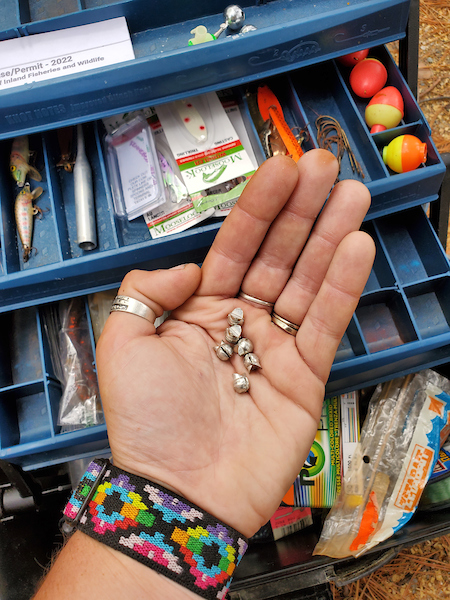
- Picking small split-shot sinkers off the bottom of the lake, mistaking them for a pebble they normally ingest to aid in digestion
How Can You Help?
- Switch to lead-free tackle made from non-toxic materials such as bismuth, tin, tungsten, steel, and ceramics (please note that zinc-containing tackle is not recommended because it is also toxic to wildlife!)
- Go through your tackle box and dispose of old lead tackle properly
- Ask your local sporting goods store to carry lead-free fishing tackle
- Reel in around loons
- Educate others about the dangers of lead fishing tackle and ask them to use non-lead alternatives (and see our page of Online Retailers)
- Attend or host a presentation or a lead tackle exchange event
How Does Lead Poisoning Affect Loons?
- Ingested lead tackle is fatal to loons
- Early signs of lead poisoning include abnormal behavior, but progress to include diarrhea, weakness, tremors, gasping and muscle paralysis.
- Loons with late stage lead poisoning will exhibit tremors, gasping, inability to fly, and will eventually pull themselves up on shore
- A loon will die within 2-4 weeks of ingesting lead fishing tackle
- Adult fatality can also result from loons becoming easy targets for predators
- Parental care of chicks decreases with adult lead poisoning and leads to increased chick mortality.
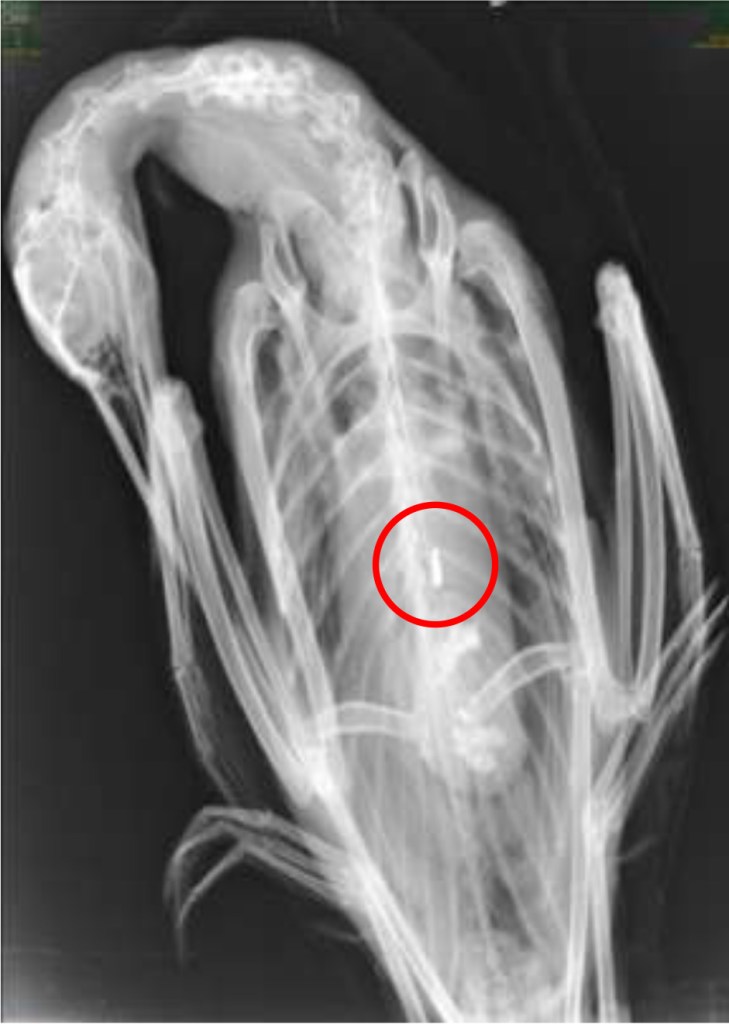
Radiograph of Common Loon TV10-138, showing an ingested lead jighead (circled). Recovered from Toddy Pond in Orland, ME on Sept. 7, 2010. (Source: Mark Pokras, Tufts Veterinary School)
Other Species Affected by Lead Poisoning
Although lead is toxic to all wildlife, birds are particularly at risk of lead poisoning because they often hold lead objects in the gizzard rather than passing them through their digestive systems. According to the US EPA, there are 75 species of birds at risk from lead tackle. The species on the list below are known to have died from ingested lead fishing tackle.
- Eagles including Bald Eagle, Golden Eagle
- Waterfowl including Common Merganser, Mallard, American Black Duck, Canada Goose
- Swans including Trumpeter Swan, Tundra Swan
- Herons including Great Blue Heron, Black-crowned Night Heron, Green Heron
- Gulls & Terns including Herring Gull, Laughing Gull, Royal Tern
News


Questions?
Send your Fish Lead Free questions to us!
 Fish Lead Free